When Worlds Collide…
Sometimes work gets personal, and that’s what happened to me lately with a pair of companion articles I wrote for Huntington. All the while I researched and wrote, I thought of this amazing lady—my mom. Additionally, I thought about past Jessica, what I wish I would have known at the start of this long and winding road of loving someone with Alzheimer’s.
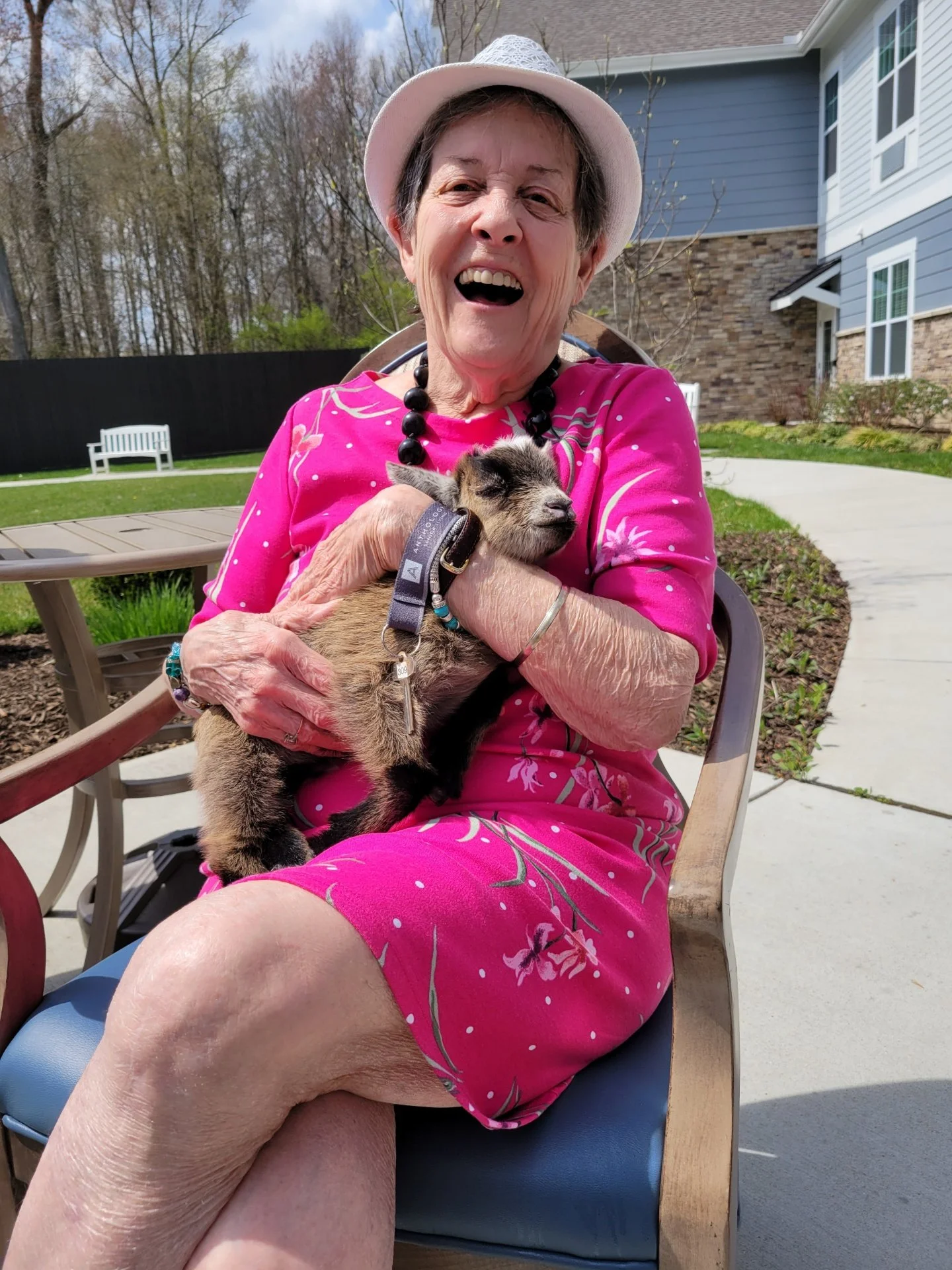
My mom, Midge Gordon, in the courtyard of her memory care unit in 2021, holding a baby goat.
Content Gets Personal
This is my mom, the vivacious Midge Gordon, back in 2021, holding a baby goat—a kid. She was already in memory care then, and has since slipped further and further away into the mist of forgetting. But to see her earliest symptoms, let’s rewind the clock some thirteen years. At that time, I didn’t (or couldn’t) see what was happening. As with many couples, my dad masked many of her issues. But when he knew he was dying in 2013, he pulled my husband and me aside to tell us that she had memory problems. I didn’t want to believe it. In the ways that mattered most, she was still the mom I’d always known. She was funny, lively, prone to telling tall tales, always running around with her friends, and yes, maybe a bit of a worry-wort. Once my dad was gone, the deficits became starkly drawn. On one particular visit, she served us meatloaf that was cold in the middle. She stopped being able to drive all the way to my house in northern Kentucky. We’d have to go pick her up in a Wal-Greens parking lot off of 74 on the Ohio side. And there was one key area she plainly could not handle at all: money. There are dozens of hours I can’t get back that involved me trying to explain online banking to my uncomprehending mother over the phone. It wasn’t funny then, but it’s laughable now to remember that I thought I could get her up and running.
From where I currently sit, I can see things with so much more clarity. But because this disease tugs you away by scant inches over time, it’s difficult to comprehend what is lost and when exactly it disappeared. Maybe reading this will help someone else see more clearly, more quickly. For the safety of those living with cognitive decline, the money piece is particularly important. Recently, my personal and professional lives collided in a way that snapped this topic into focus. In writing a pair of companion articles for Huntington.com, I uncovered a staggering fact in my research: data show that financial trouble is one of the very earliest signs of cognitive decline. And when I say early, I mean really early. Falling credit scores and missed payments are highly correlated in the data of financial institutions with a later power-of-attorney filing, commonly appearing 8 years prior to this more official step. For most people, that’s well before any doctor’s diagnosis.
I wish I had known this back then. It’s incredibly difficult to understand when and how to offer help while allowing your loved one to maintain a level of autonomy and independence. Because they don’t leave all at once, but in unbearably sad, small increments. I’m really proud of these two articles that offer clear-eyed information and hope for helping someone experiencing cognitive decline with their money:
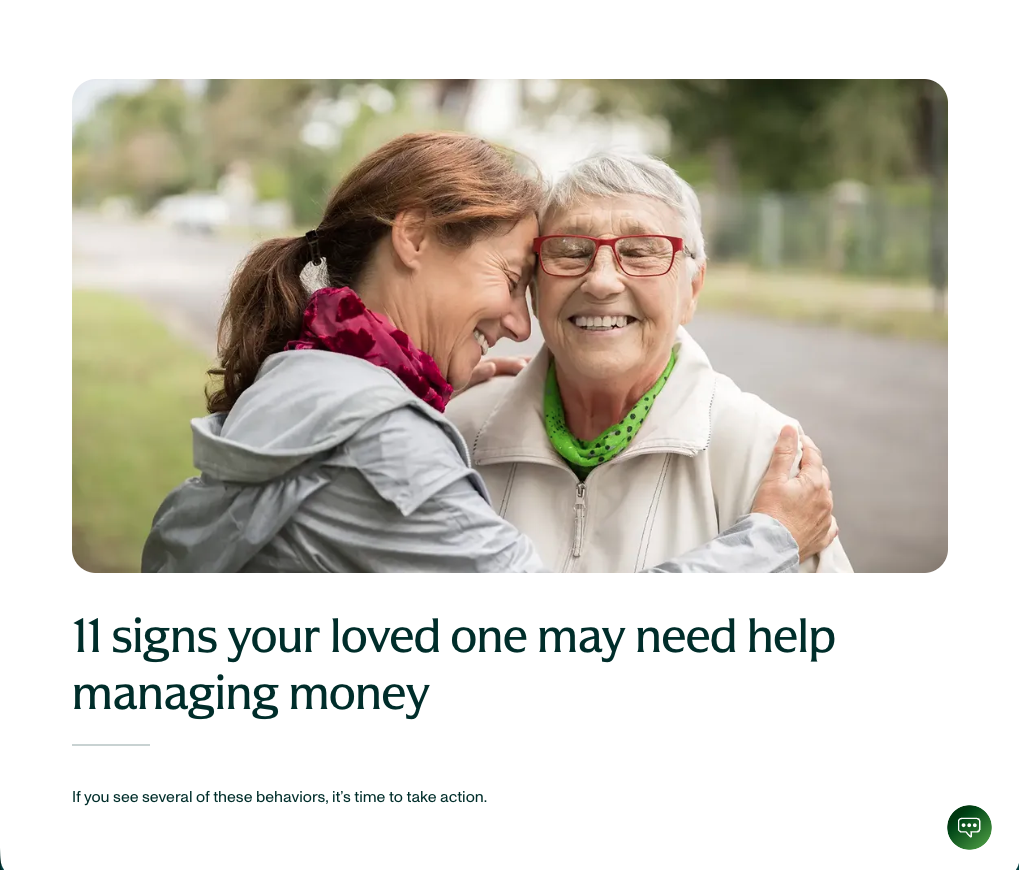

The first article compiles the financial warning signs I wish I would have known to be looking for. Sure, I googled “signs of Alzheimer’s,” and many other iterations of that search. But I hung on to the belief that my mom could be financially independent for far longer than I should have. You see, even when a person’s executive function begins degrading, they continue to fiercely cling to their right to self-determination. As they should. But what I didn’t know then and see better now is that they’re unreliable narrators of their own desires. Which leaves caregivers in a pickle. What exactly should you believe? The financial signals are one clear signal that speak the truth, even if your loved one cannot.
The second companion piece offers real solutions, things you can do to keep your loved one’s money safe and secure that don’t require filing legal paperwork or putting your name on their accounts. I wish I would have known these were steps I could take. I wish something like Huntington’s Caregiver Banking option had been available for us then.
Beyond being obviously intensely personal for me, I’m professionally enlivened by the experience of creating this content. It represents the confluence of well-researched journalism and deeply felt empathy for customers. These articles have the potential to help people in meaningful ways. And you could argue that the only place you’ll find content like this – at least currently – is from a brand. The ideas shared here are not news, so they won’t break through the noise in the news feed on your phone. But they’re not typical marketing, either. Interestingly, content like this fills a gap in the current crowded information ecosystem. My mission is to continue to fill this gap in many different ways. Factual, helpful, educational information is sorely needed across a myriad of use cases—and it’s patently missing. This is one vivid example of a win-win for brands and their customers.
I don’t know who needs to read this today, but I am sure that someone does. If it’s you, my heart goes out to you. I’m not alone in losing my mom in painful increments over years. Although I can visit her any time, I miss her fiercely every day. Today, I completely manage all her finances, and every other aspect of her life. But back then, I couldn’t see how much help she needed and I didn’t know how to help. I wish I had known. And now you do.
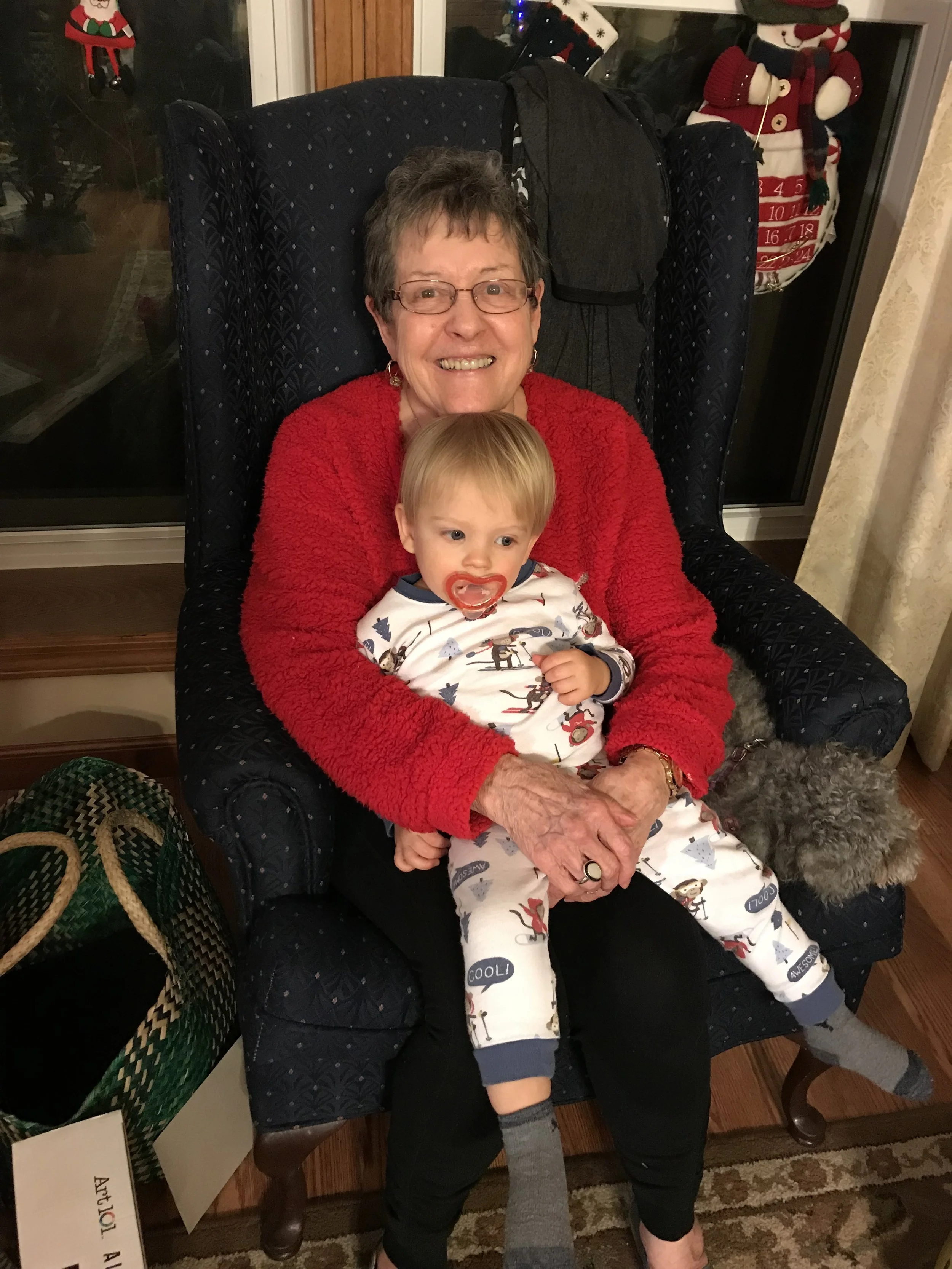
My mom with her grandson, Blaine, in 2017. It was the last Christmas she’d spend in her house on Brookside Lane. I wish I had known.