A(I) Reflection on the Contents of a Year
AI has certainly flavored everything this year, especially when it comes to content and the written word. For one, the em dash finds itself at the dangerous intersection of AI and grammar, strangely in the social media spotlight. But if you ask me, reports of its death have been grossly exaggerated. Secondly, AI has definitely informed the choice of word of the year, and not in a positive way. Do you agree with the pick? Read on for my take…
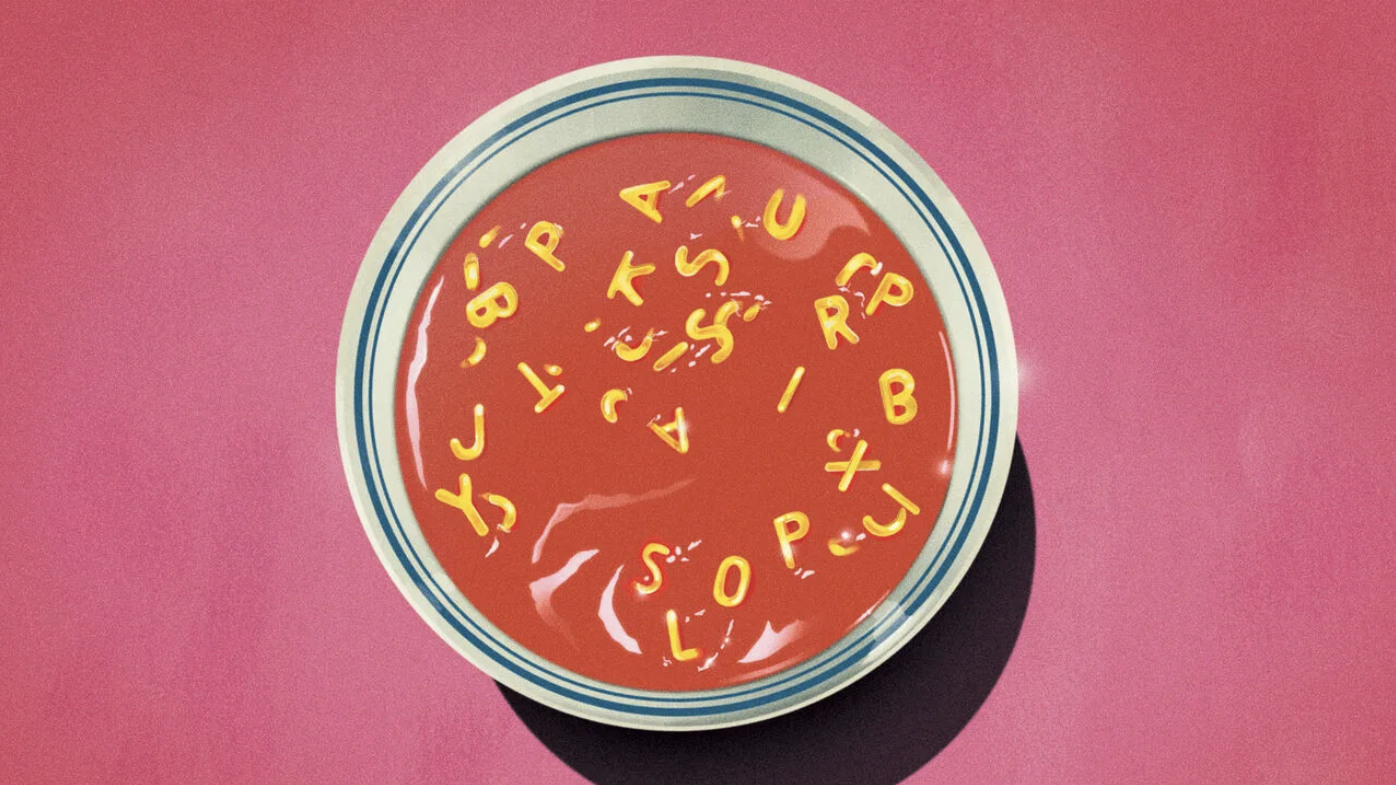
This bowl of AI soup is deliciously spot on for embodying the inherent issues with some AI-generated content.
Word of the Year: Slop
According to both The Economist and Merriam-Webster, slop is the word that most embodies 2025. As in AI slop. The artwork that accompanied The Economist’s announcement is so deliciously spot-on. Note the weirdly misshapen letters, the soup sloshing impossibly high up one side of the bowl’s rim and the unnatural surface shine. Yes, many of us have splashed head-first into AI and marveled, “Look what it can do!” Yet the novelty wears thin. In particular, the flood of AI social posts and commercials is… underwhelming. As perhaps we shouldn’t be surprised to find, it all feels deeply artificial. Unnatural. In many cases, sloppy. Or it just leaves you with a residue of weird—and a craving for something real.
I do use AI, mostly for research and as a thinking partner. In some cases, I have adopted bits and pieces of its output in my writing. Mostly, I try to avoid outsourcing the work of crafting sentences, paragraphs and pages to the “hive mind” because there is something essential in the struggle to solidify my thoughts into a concrete cadence that is meaningful both to me and to the reader.
At its vital core, the beating heart of writing is to create authentic connection and ongoing conversation. That requires a singular perspective. Who am I as a human? What do I think? What do I believe? What do I carry with me from my lived experiences, from my heartbreaks and triumphs, that I can shape into a novel thought to share with my fellow living beings? In this small corner of the Internet, that’s what keeps me going. I hope as you read my words, you can feel the authenticity, my hard-won efforts to show myself in what I write.
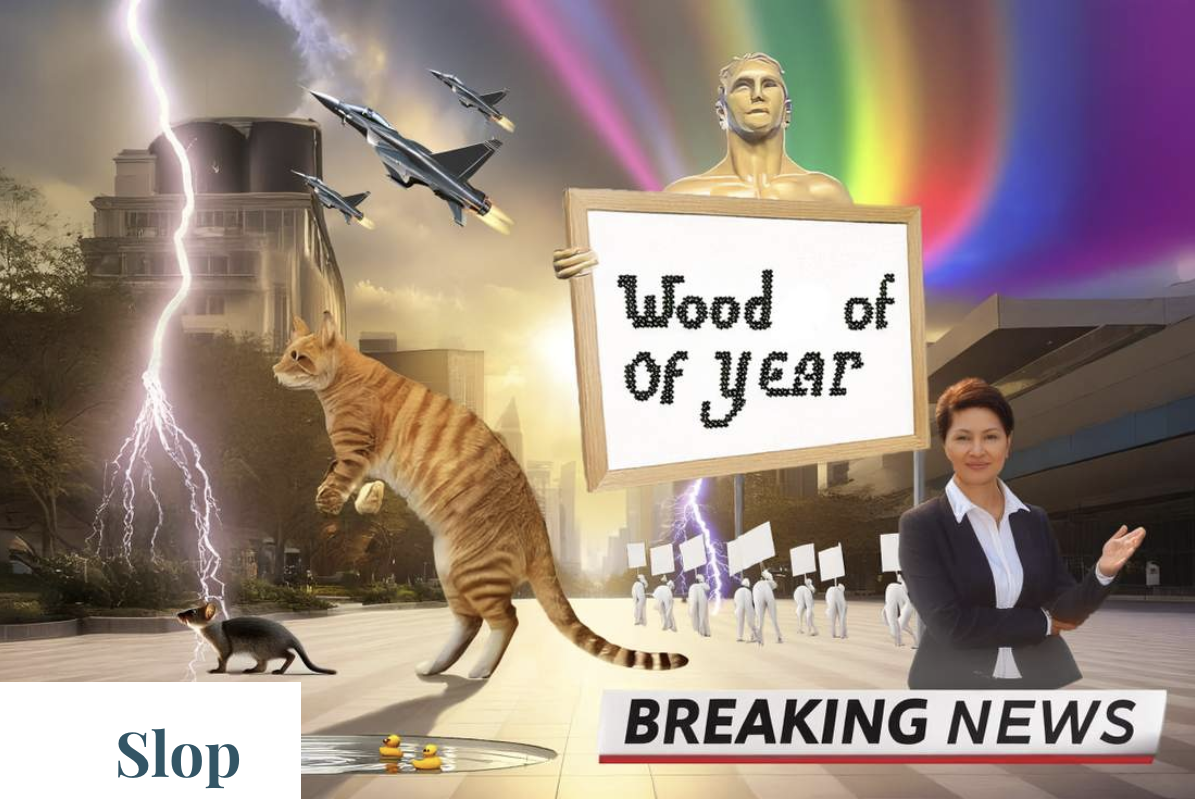
Merriam-Webster went with an AI-slop collage to go with their top words of 2025 story.
Has AI Killed the EM Dash?
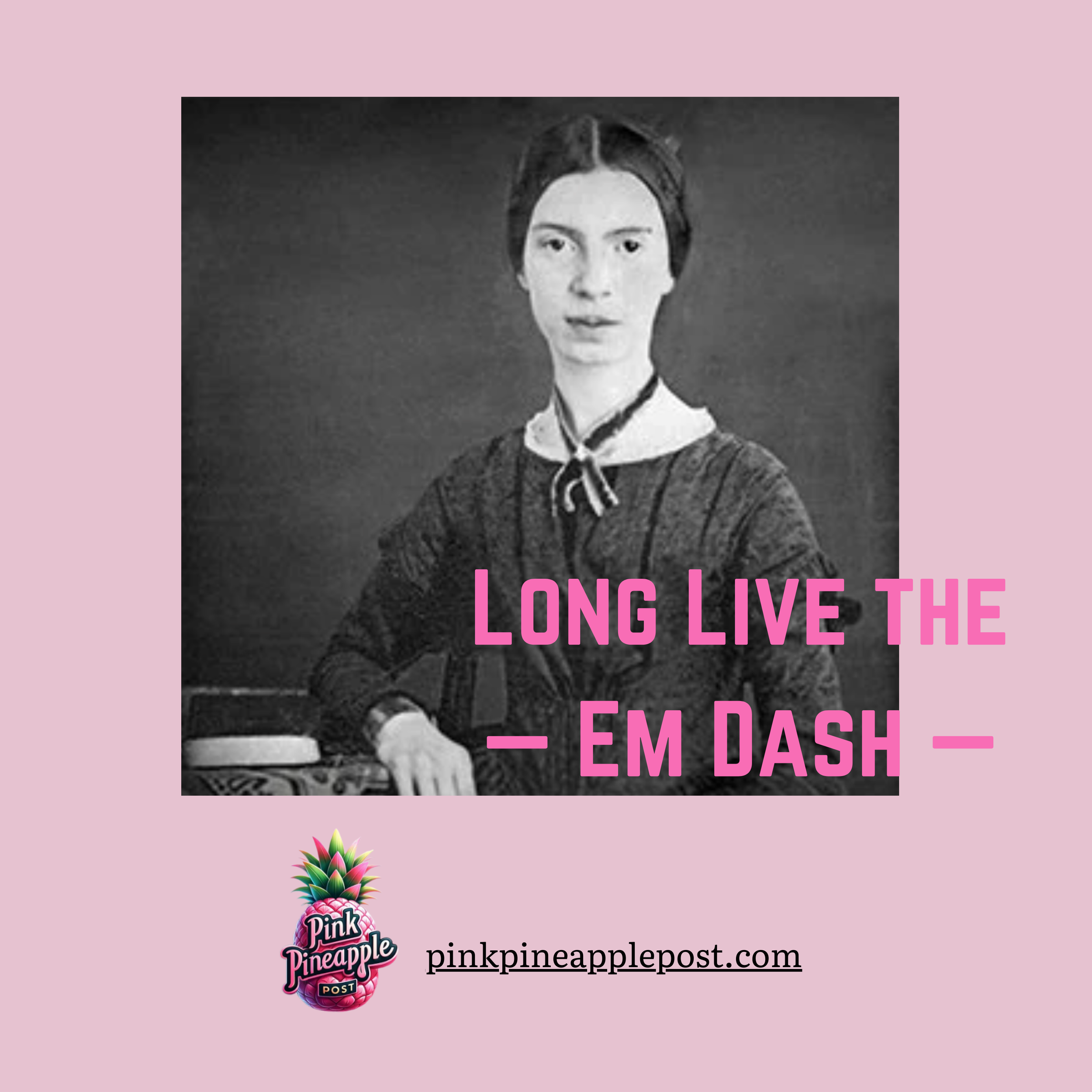
One grammatical low-light of the year has been the relentless focus on that syntactical workhorse, the em dash. Honestly, it baffles me. If you’re new to the debate, many have glommed onto this poor piece of punctuation as the telltale hallmark of AI-created content. Indeed, AI seems to excessively rely on this helpful pregnant pause. It’s dramatic, certainly. If you ask me, it looks sexy on the page, too. Personally, I find it much friendlier than the pedantic and pretentious semi-colon—no offense, Virginia Woolf. By the way, I’m in good company here, as Kurt Vonnegut once wrote: “Here is a lesson in creative writing. First rule: Do not use semicolons… All they do is show you’ve been to college.” I’m just glad Emily Dickinson isn’t alive to see her beloved dash maligned.
The best writers vary their sentence structure, employing any and all punctuation types as needed. They match literary devices to the ideas they’re bringing to life. And heck yeah, real life human writers absolutely do use em dashes—why wouldn’t they? The actual problem here is less about punctuation and more about how most people don’t bother with whole books anymore. Spend any amount of time with authentic written content and you will encounter the em dash in all its messy glory.
So is the em dash dead? Not for this writer. I’ll use it as I always have—sparingly, lovingly, as just one more useful tool in my writerly arsenal.
Long live the em dash!