How I Use AI as a Writer
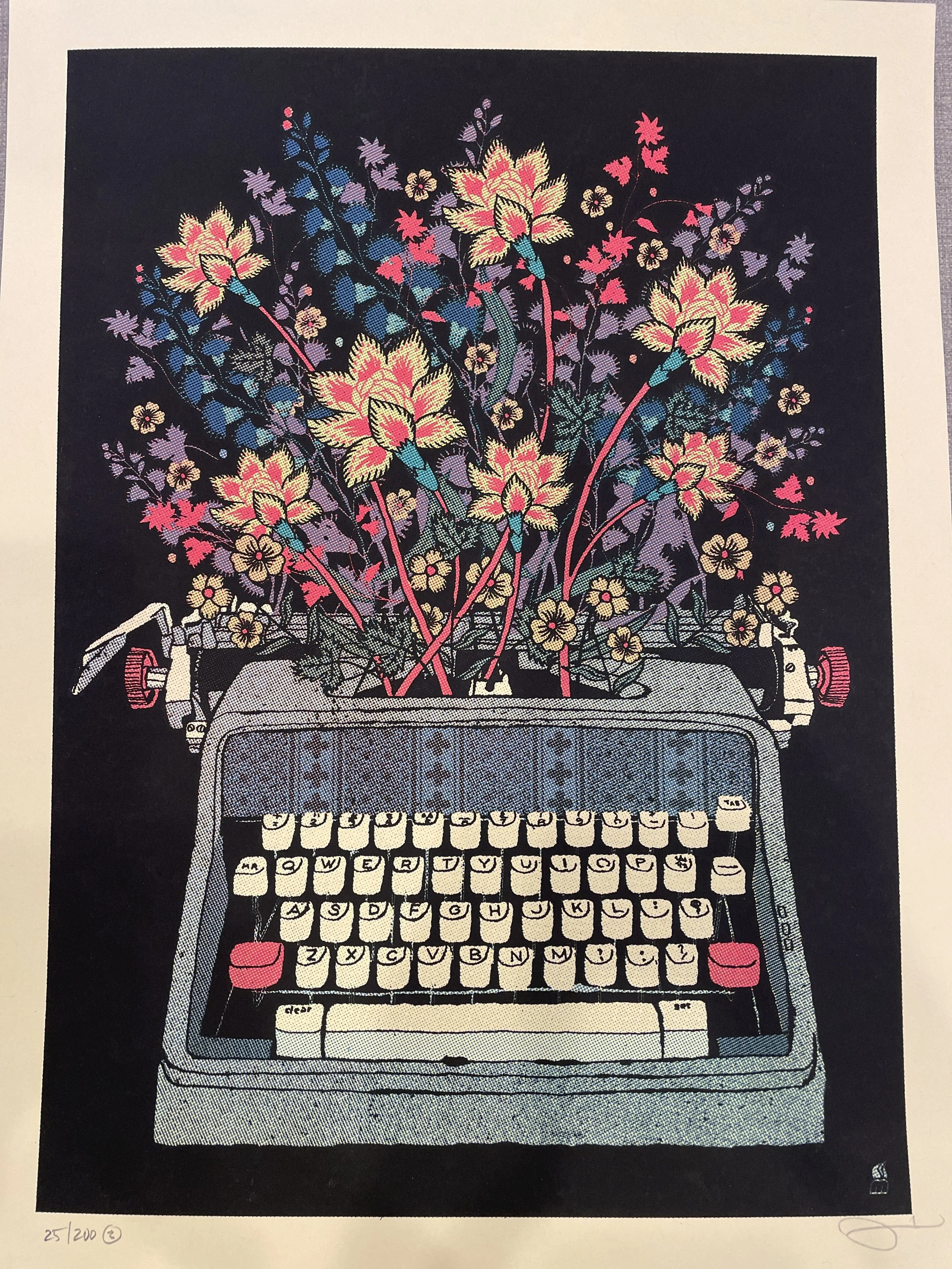
I Learned to Write the Old-Fashioned Way…
Over the past couple of years, I’ve experimented widely with AI—although I’m only scratching the surface compared to super users I know. As of now, I see it as a utilitarian tool that can help me shape my thoughts and ideas into something shareable. The whole proposition is a bit complicated for me because I’m a writer by inclination, training and profession. Why complicated? It’s painful to understand that most people can’t tell the difference at all between something written by me versus by ChatGPT. And I’ll give credit where it’s due. Artificial intelligence is excellent at writing. Quick as I am at a keyboard (ahem, I may have learned to type on an actual typewriter…), AI can produce thousands of words in 60 seconds flat. If I can produce a rough draft of 500 words in a half hour, I glow with pride.
My first published pieces were printed (literally pasted up) in the Plainfield High School newspaper, and I have kept going ever since then. Writing is not easy for me, but it is natural. I have honed my writerly skills over decades, mastering methods for conquering the blank page and for being a ruthless editor of my own work.
Importantly, I write to discover what it is I really think. As Percival Everett writes in James, “I wrote to extend my thought. I wrote to catch up with my own story, wondering all the while if that was even possible. I saw more clearly, farther, further. My name became my own.” More than anything else, this explains why I do not use AI to write for me, not even a rough draft.
I noticed that when I outsourced writing to ChatGPT, it sounded good at first read but it wasn’t wholly mine. Like when you try to present someone else’s deck, and you suddenly feel this disorienting vertigo because they aren’t actually your words. Or when your boss micro-manages you into an approach or a language that isn’t authentic to who you are, and your mouth feels suddenly stuffed with cotton trying to wrangle itself around misfit words. I tried copy-pasting little snippets from ChatGPT into my in-process document, but found the flow was interrupted, and it was difficult to regain momentum. For me, there’s something essential about the manual work of stringing together each word, stacking sentences and building a cohesive piece that’s both functional and aesthetically pleasing. Also, an authentic expression of me. My goal is always to write what only I could produce. That North star and intention for my writing shapes how I do use AI as a tool.
The exception to this rule for me comes when writing shorter-form copy, or conducting a specific exercise or experiment where rapid-fire iteration is useful. In those instances, I do invite AI to write.
Experimentation & Iteration
As any writer worth her salt knows, it’s much more difficult to write short than long. It seems my natural writerly sweet spot falls at around 1,000 words on most topics. That’s a roomy amount that allows a bit of meandering, taking time to build and explore on the way to making your case. But in instances where you have only 50 or 100 words, every single choice has to be impactful and packed with meaning. Take the tricky “About Me” section on your LinkedIn profile page. Should be simple, right? But it’s actually quite difficult to boil yourself down to your essential nugget in that unforgiving space. In this instance, AI is a perfect partner for very quickly experimenting with tons of different approaches to help you settle on the best one. Even then, this task should not be wholly outsourced to AI, because the words need to sound authentically you.
Another great example of this comes from an exercise that was part of the Unboxed course I took through Generalist World. The assignment was to write a “one-liner” that encapsulates who I am as a professional, after working through a series of prompts. The ultimate goal was to fill in this template: “I help [target audience] achieve [specific outcomes] by [unique approach]. Let me tell you about the time [specific example].” As a complement to this exercise, Generalist World alumnus Lindsey Lerner built a ChatGPT agent to help with this specific task. I input a wordy version, and it spit out a dozen shortened permutations. Here’s one example:
I create strategic content marketing frameworks that go beyond campaigns—helping brands embody their values, connect deeply with customers, and leave a lasting impact.
For contrast, here’s one I had written unaided:
I help highly matrixed organizations connect with customers by crafting strategic content marketing frameworks that bring brands to life in meaningful ways. At Kroger, I built a lucrative magazine property with a circulation of 5MM customers nationwide (a bigger reach than Time Magazine, for perspective).
The fun part of iterating with AI was that it wrote me a bunch of different permutations with distinct emphases, from impact and strategy to customer-centric.
I actually return to this whole document quite often, alternating between which versions best fit my current usage need.
If you want to try a bunch of different approaches to see what might work best, AI is a fun and easy tool that accomplishes this task way faster than a human ever could.
The approach that works best for me, as a writer who has worked hard to hone my unique writerly voice, is to always start with words that are wholly mine. Only then do I engage with AI.
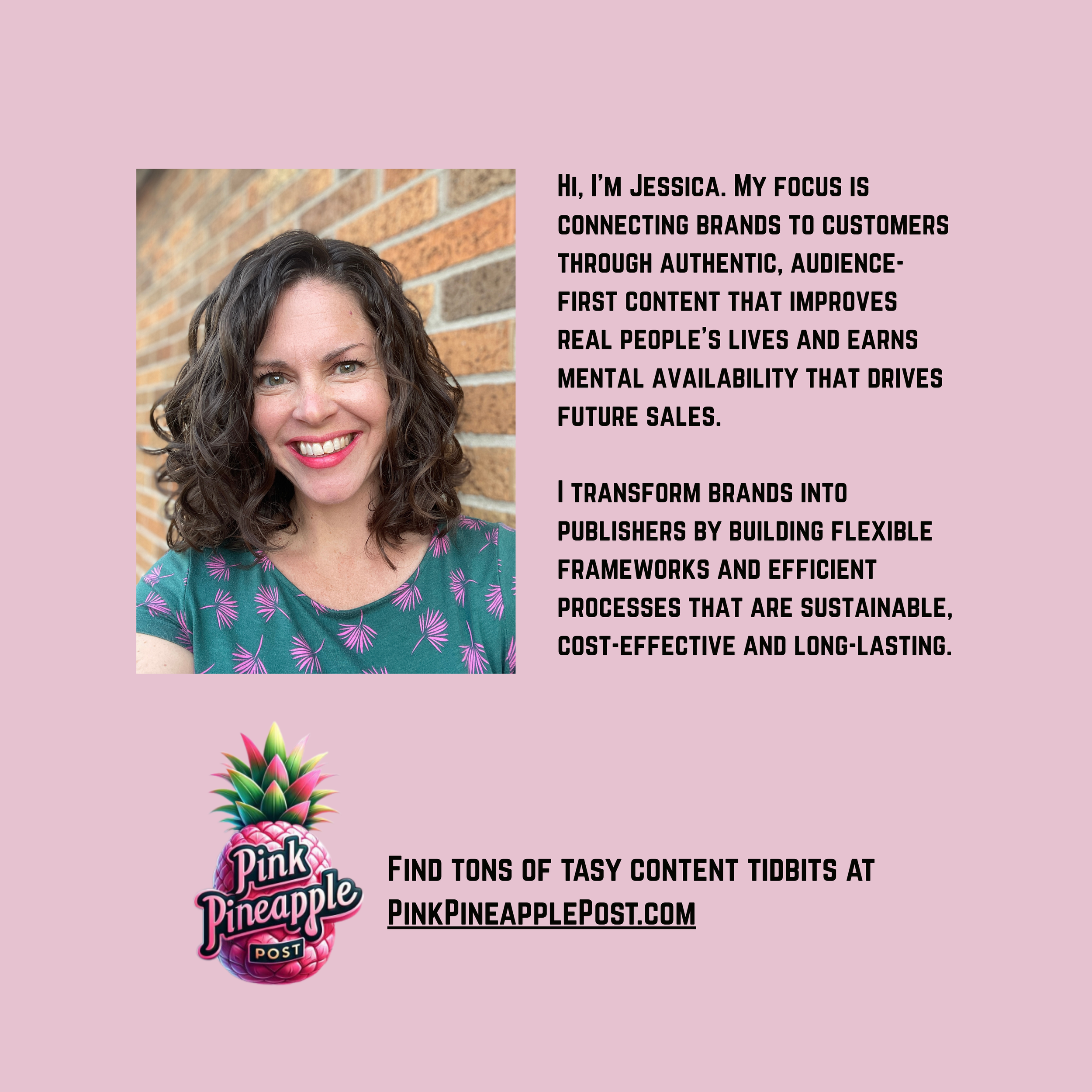
I used one of the AI-generated one-liners to create this short and sweet “about me” page…
Research
This is by far my favorite way to work with AI as a writer. Although I’ve always considered myself a fairly accomplished researcher, combing through Google searches now seems like putting out fires the way they did before the fire hose, with bucket brigades. My main AI research partners have been ChatGPT and CoPilot. They’re both incredibly fast, and I can also change my direction to try something new with very little friction. One thing in particular I love about ChatGPT is that it often voluntarily offers to make a comparison chart so I can easily see the similarities and differences between the variables I’m considering. It’s incredibly helpful for quickly understanding what something is, gaining context and getting answers to questions that help deepen my thinking on the subject.
However, similar to how Wikipedia is a great starting point but obviously not the finish line, AI as a research assistant also has some very serious shortcomings. When it points you to published material, you absolutely have to determine the source, the date and the quality of the article. You can then point out the weak spots and ask AI to find something more recent, or from a particular type of journal or publication.
I have also found it’s a sound practice to match the type of research you’re doing with the corresponding best AI research tool. For general-purpose research, ChatGPT and CoPilot are adequate. But when entering the realm of academic research, I’ve had better success with Perplexity and Scholar GPT.
Reference Material Recall
This one is equal parts alarming and useful. Sometimes I recall the rough outline of an anecdote, plotline or concept from a book I’ve read but the particulars escape me. I can then ask ChatGPT to provide the details or refresh my memory. This is massively helpful because I don’t have to go and track down the book again, then try to find the chapter and page. It’s alarming because AI isn’t supposed to be holding so much copyrighted material. To be fair, of course, it does not provide verbatim passages or paragraphs, or even quotes. But it does seem intimately acquainted with the texts.
Thinking Partner
If you happen to know me, you know that I am very much a conversational processor. You may even have been on the receiving end of me telling you all about this book I’m reading and the questions it’s raising for me, and what you do think of… [fill in the blank]. If this is you, then thank you for listening and nodding along, even if you weren’t actually that interested.
I especially adore the walk-and-talk, during which I verbally dump out my current brain contents and ask you lots of questions or maybe do most of the talking. Copious amounts of sunshine preferred.
For someone like me, AI becomes an always-on thinking partner that never sleeps and is incapable of being annoyed by me circling the same subject from a gazillion different angles. Also, you don’t have to be nice to it and you can tell it you think it’s wrong with no hurt feelings. I know some people feel compelled to be on their best manners with AI, but I feel fine using a much more stripped-down, to-the-point tone than I use with real people who do possess real beating hearts and actual feelings.
Some people turn to AI as more of a therapist, for processing different events and their emotional responses, and this is a corollary to that—just more based around refining ideas, sharpening a thesis.
Idea Scaffolding
As a writer, I’m mostly organic in my process. I find an entry point of some sort, which isn’t necessarily the beginning, and get typing. Then I land on my key points, or topics I want to be sure to hit, and I might jot down a few phrases so I don’t forget. All this to say, I’m not huge on outlines. Which is why I don’t use AI to generate them for me. However, if I’m writing through a complex or slippery subject that requires building a multi-step argument to support my thesis, I do use what I call AI-created “idea scaffolding.” This is a natural output of using AI as a thinking partner. It often voluntarily builds these sorts of ladders that sharpen or clean up your original messy line of thinking and put it into order.
To help me keep track of the logic flow of a more complex piece, I’ll often copy-paste these AI outputs into my document, or a second one opened to the side. I suppose it’s similar in a way to the index card research technique they used to teach one million years ago. The idea then was to write a quote per card so you could easily keep track of critical thoughts you planned to incorporate into your essay. Instead of quotes, this idea scaffolding helps keep track of central ideas, also providing a flow to follow. It’s an outline of sorts, but not in the traditional sense.
I feel grateful that I built my writing muscle memory long before the advent of AI. While it’s an incredibly useful tool, and I do frequently use it, I am not reliant on it. As with most things in life, I don’t feel that there’s a right or wrong way to use it. Right now, AI is one giant gray-play area, where curiosity and open-mindedness rule the day. For me as a writer, it’s all about intentionality and considered choices. I have defined the ways in which I incorporate AI into my process, and I certainly reserve the right to change my mind. But for now, these are the ways of writing with AI that work best for me.
P.S.
One way that I would like to experiment with AI is by training it on my full body of work so it can write more like me and also access ideas across everything I have written. However, concerns about how the models are trained and voluntarily feeding it my hard-won work currently hold me back.
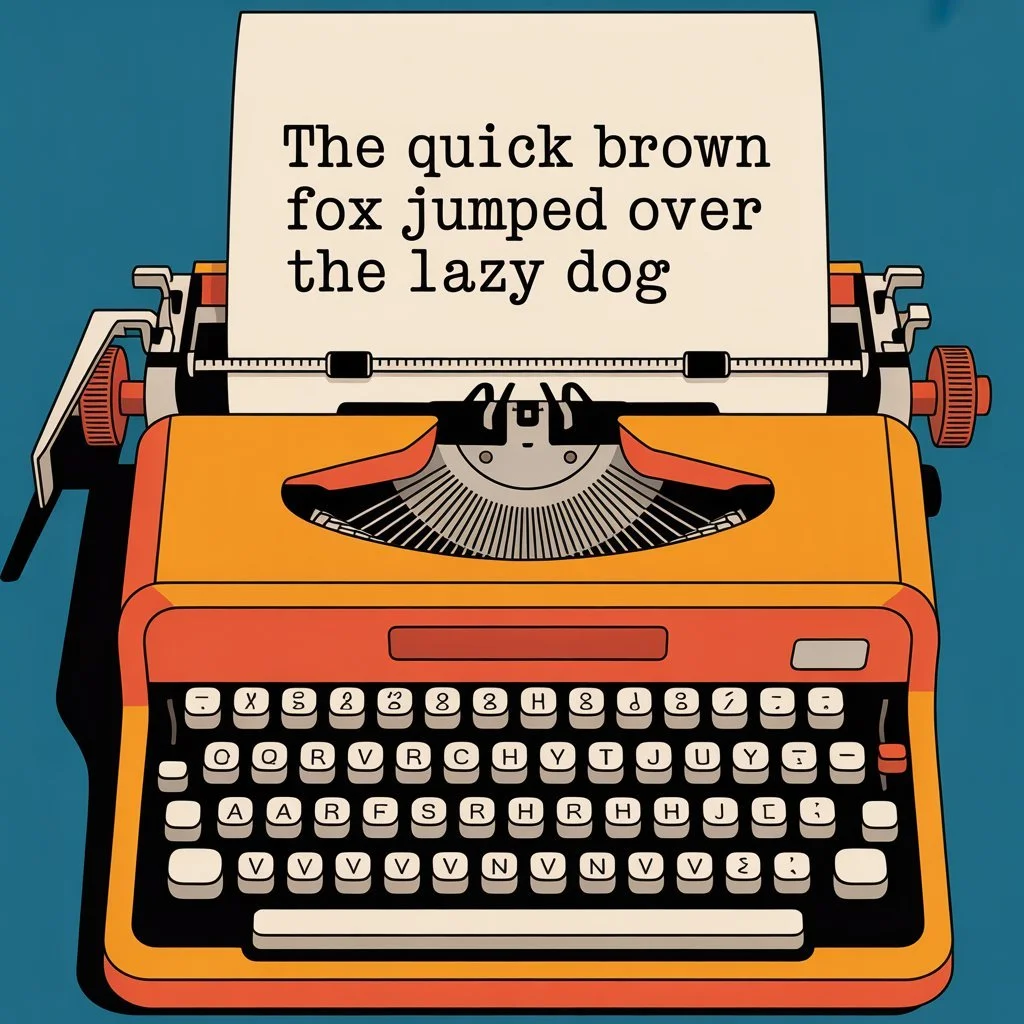
As I remember it, I learned to type on a bright orange typewriter. I loved it. The satisfying clacking. The ding as the typewriter went to the next line. The wet ink drying on the paper. Did you know this memorable typing phrase is called a pangram? That’s a sentence that uses every letter of the English alphabet at least once. ChatGPT told me that. I had Ideogram make this image for me, but no matter how I tried it could not manage to get the right letters and numbers on the keys. Ironic, right?

👋 Hey, there! If you don’t know me by now, I’m Jessica. Marketing strategist, storyteller, writer & framework builder. I help brands connect with customers through authentic content that clicks. If that sounds sweet to you, subscribe to my newsletter: Pink Pineapple Post. If you’re already a regular reader, thanks! Consider sharing my tasty tidbits with a friend.